
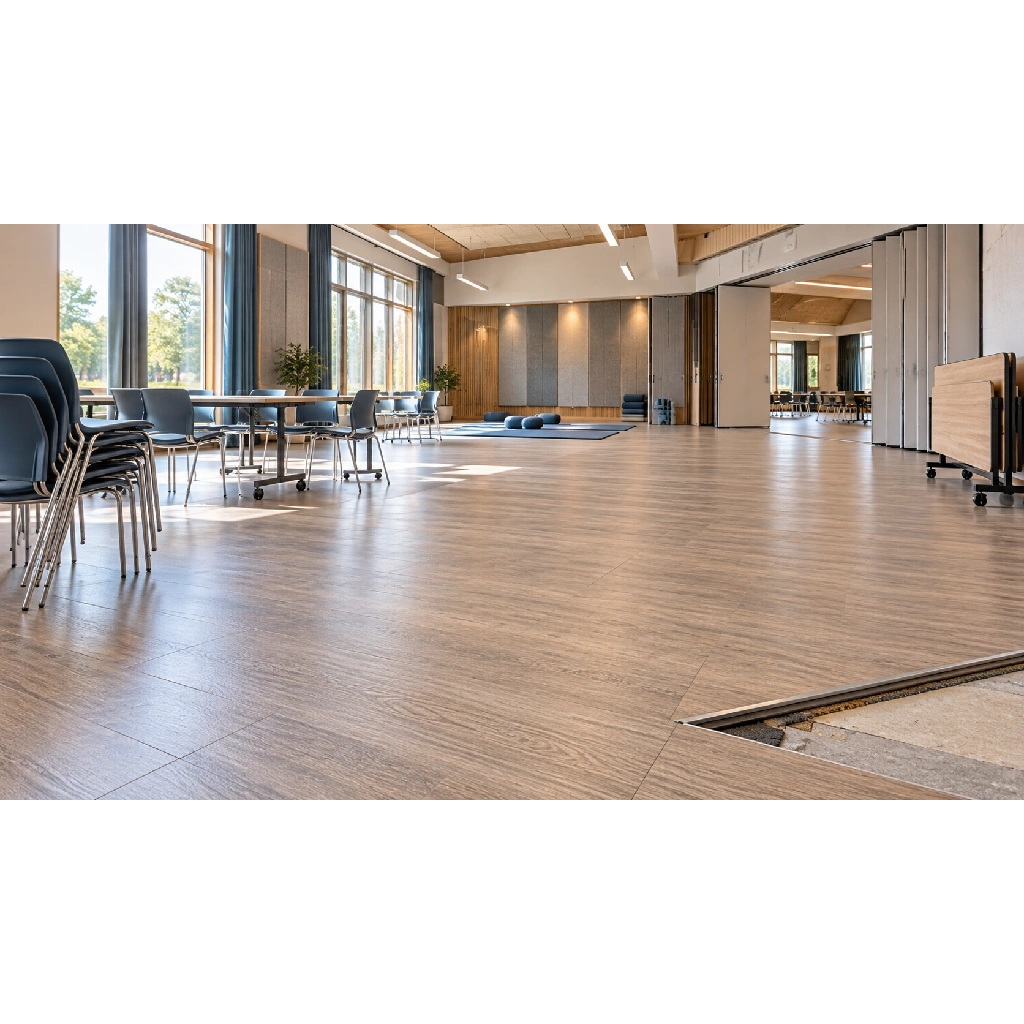
A room used for meetings in the morning, group activities in the afternoon, and events at night puts unusual demands on its floor. Footsteps, moving chairs, and dropped objects can be distracting, especially when several activities happen nearby. Acoustic flooring can help, but its value depends on which sounds matter, how the room is used, and what sits beneath the finished surface.
“Acoustic flooring” describes floor systems chosen partly for their effect on sound. Some reduce the noise made within a room, such as footsteps on a hard surface. Others limit impact sound passing through the floor into a space below. Those are different goals, and a product that helps with one may do less for the other.
A softer surface can also make a room feel less harsh by absorbing some sound instead of reflecting it. However, flooring alone will not solve every echo problem. Large windows, bare walls, and high ceilings still influence how speech and music sound. If clear conversation is the priority, the whole room deserves attention.
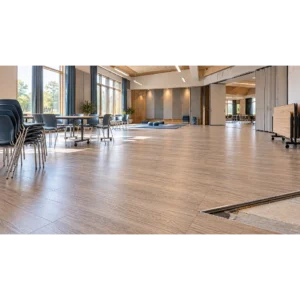
Acoustic flooring is particularly useful when a multi-use room has frequent movement, shares a floor with quieter spaces, or changes between activities with different sound levels. Consider a community room above offices. A hard floor may suit events and cleaning routines, yet chair movement and group exercise could disturb people working below. In that setting, the floor assembly should be assessed for impact noise as well as wear.
The room’s schedule matters too. A meeting space that occasionally hosts a social gathering may need a different balance from a room used daily for fitness classes. Ask what happens most often, what creates the most noise, and who is affected. That gives the flooring choice a clearer purpose than simply looking for the product described as the quietest.
Acoustic performance may be less decisive in a ground-floor room with no sound-sensitive neighbours, particularly if activities are mostly seated. Comfort, cleaning, durability, and appearance might reasonably take priority there.
There is no single surface that suits every combination of uses. Each option changes how the room feels and how it must be maintained.
Imagine a school room used for lessons, assemblies, and indoor activity. Carpet might make seated sessions quieter but complicate cleaning after active use. A resilient floor could be more practical, provided its sound and activity requirements are considered together. The example illustrates why the timetable should guide the material choice.
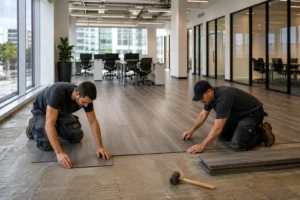
Even a well-chosen covering can disappoint if the subfloor is uneven or the layers are installed in a way that limits their intended effect. The condition of the existing floor should be checked before comparing finishes. Leveling work, including floor screeding where appropriate, may be needed to prepare a suitable base.
For rooms above other occupied areas, ask for information about the complete floor assembly, rather than a sound rating for a surface layer in isolation. The structure, underlay, edges, and installation details all affect the result. Sound can also travel through adjoining building elements, so a floor change may reduce disturbance without removing it entirely.
Floor height is another practical constraint. Adding layers can affect thresholds, doors, and transitions to neighbouring rooms. In a frequently rearranged space, those details influence both access and day-to-day use.
For more detailed information on this topic, read our guide on How Terrazzo Flooring Combines Durability and Modern Design.
Before selecting acoustic flooring for a multi-use room, write down its regular and occasional activities. Then review a few questions:
Samples can help compare texture and appearance, but they cannot show how a finished room will sound. For a room with significant noise concerns, discuss the existing structure and intended use with a flooring professional before committing to a system.
Acoustic flooring fits best when it addresses a specific sound problem while meeting the room’s everyday demands. Define the activities and the people affected by noise first; then compare complete floor options for sound, durability, comfort, and maintenance. That approach makes a flexible room easier to use without expecting one floor covering to do every job.