
Industrial floors support heavy equipment, constant foot traffic, and daily operations. Without proper care, damage builds quickly and leads to expensive repairs. A planned maintenance strategy protects your investment and keeps operations running safely.
Businesses that maintain industrial floors reduce downtime, improve workplace safety, and extend the service life of their flooring systems. Regular inspections, cleaning, and timely repairs prevent small defects from becoming major structural problems. By following proven maintenance practices, we can improve floor performance while lowering long-term ownership costs.
Industrial environments place continuous stress on flooring surfaces. Forklifts, pallets, chemicals, and machinery all contribute to wear over time. Regular maintenance prevents cracks, surface erosion, and coating failures before they become serious issues. It also helps facilities meet workplace safety standards by reducing slip hazards and uneven surfaces.
According to facility management experts, preventive maintenance costs significantly less than replacing damaged flooring. Well-maintained surfaces also improve operational efficiency because equipment moves smoothly across stable floors. This approach increases durability while reducing unexpected maintenance expenses.
Reduces costly repairs.
Improves workplace safety.
Extends flooring lifespan.
Maintains a professional appearance.
Minimizes operational downtime.
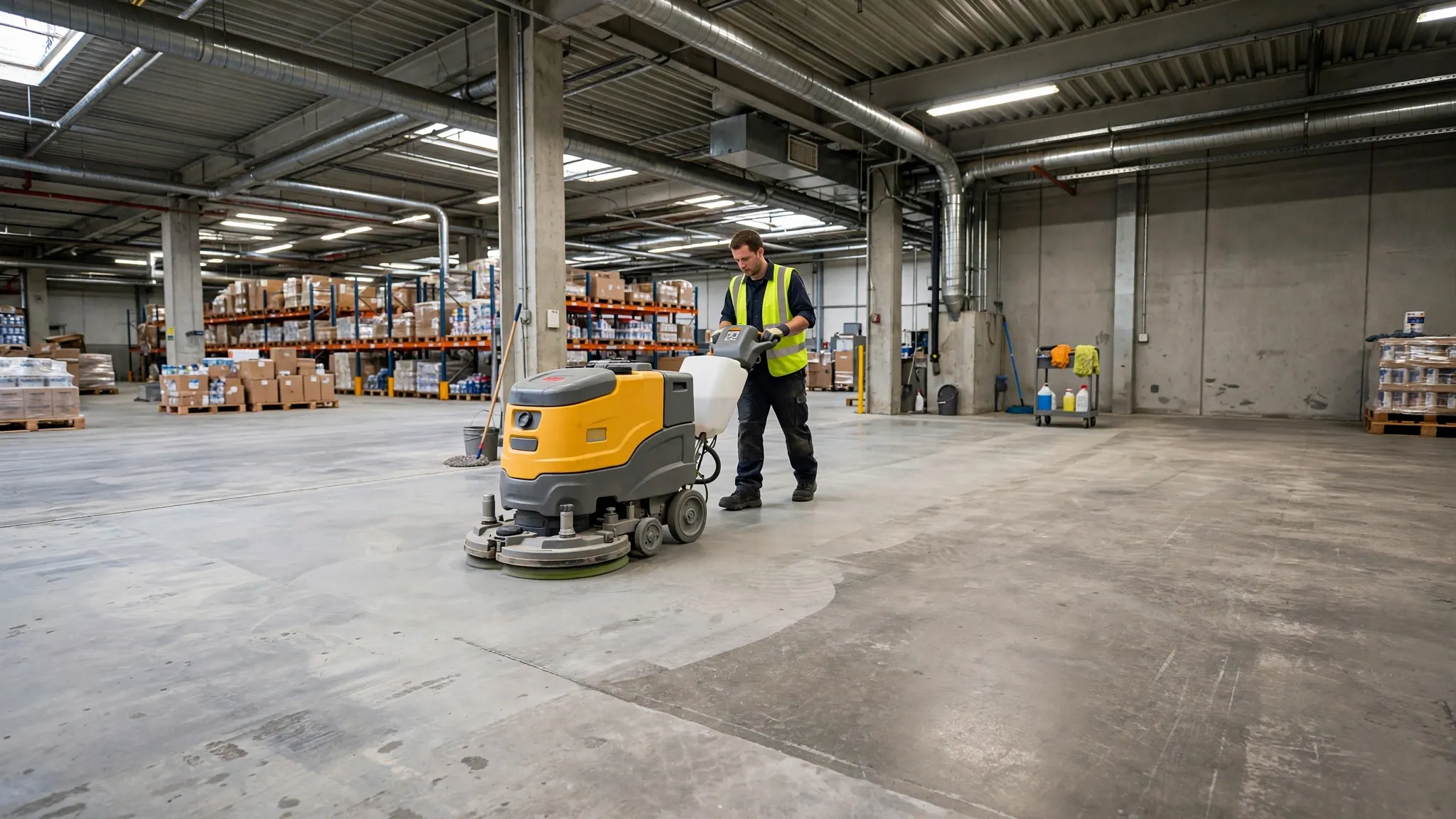
Dirt, sand, and chemical spills slowly damage protective floor coatings. Daily sweeping removes abrasive particles before they scratch the surface. Weekly mechanical scrubbing removes grease, dust, and contaminants that weaken flooring materials. Selecting cleaning products designed for specific flooring types prevents unnecessary chemical damage.
Cleaning schedules should match facility activity levels. Warehouses with constant forklift traffic require more frequent cleaning than light manufacturing areas. Immediate spill removal prevents stains, corrosion, and slip hazards while preserving the protective finish.
| Maintenance Task | Suggested Frequency | Primary Benefit |
|---|---|---|
| Dry sweeping | Daily | Removes abrasive debris |
| Wet scrubbing | Weekly | Eliminates grease and dirt |
| Spill cleanup | Immediately | Prevents staining and damage |
| Deep cleaning | Monthly | Restores protective finish |
| Full inspection | Quarterly | Detects early wear |
Routine inspections identify problems before repairs become expensive. Small cracks, surface chips, and coating wear often appear long before structural damage develops. Facility managers should inspect high-traffic zones, loading docks, machine areas, and entrances where wear occurs fastest.
Documentation also improves maintenance planning. Recording inspection dates, repair history, and observed defects helps maintenance teams prioritize work. Consistent monitoring reduces emergency repairs and supports long-term budgeting.
Forklift travel lanes.
Loading and unloading zones.
Machine foundations.
Chemical storage areas.
Building entrances.
Ignoring small defects often leads to larger structural failures. Hairline cracks allow moisture and chemicals to penetrate below the surface. Over time, this weakens concrete and damages protective coatings. Prompt crack sealing prevents water infiltration and extends floor performance.
Damaged epoxy coatings should also be repaired quickly. Worn coatings expose the underlying surface to impact and chemical attack. Professional patching restores protection without requiring complete floor replacement, making maintenance more cost-effective. Explore our latest insights on the Top Benefits of Professional Flooring Installation for Businesses.
Heavy machinery places repeated stress on industrial flooring. Using load-distribution pads beneath stationary equipment reduces concentrated pressure. Rubber wheels and properly maintained forklifts also minimize surface abrasion during daily operations.
Chemical exposure requires additional protection. Many industrial facilities use epoxy or polyurethane coatings because they resist oils, solvents, and cleaning chemicals. Staff should receive proper training on spill response procedures to prevent long-term surface damage.
Install protective floor coatings.
Use equipment with suitable wheels.
Remove chemical spills immediately.
Avoid dragging heavy equipment.
Train employees on floor care procedures.
Some maintenance tasks require specialized equipment and technical expertise. Professional contractors perform surface grinding, coating renewal, joint repair, and moisture testing. These services restore performance while identifying hidden problems before they affect operations.
Maintenance schedules should reflect the building’s workload and flooring type. Facilities operating around the clock often benefit from annual professional assessments. Combining expert servicing with daily preventive care delivers the longest service life for industrial floors.
Proper maintenance protects industrial floors from daily wear and costly damage. Regular cleaning, inspections, timely repairs, and professional servicing work together to maximize durability. A proactive maintenance plan improves safety, reduces operating costs, and keeps flooring performing reliably for many years.