
Terrazzo flooring has a distinctive ability to combine practical performance with visual flexibility. Its surface can feel clean and contemporary in a modern office, colorful and expressive in a retail space, or understated in a residential interior. At the same time, its dense construction makes it suitable for areas where flooring needs to handle regular foot traffic and everyday wear.
This balance between durability and design is one reason terrazzo continues to appear in both traditional buildings and modern interiors. Rather than relying on a printed pattern or surface decoration, terrazzo creates its appearance through a mixture of decorative aggregates and a binding material. The result is a floor that can be customized while maintaining the qualities needed for long-term use.
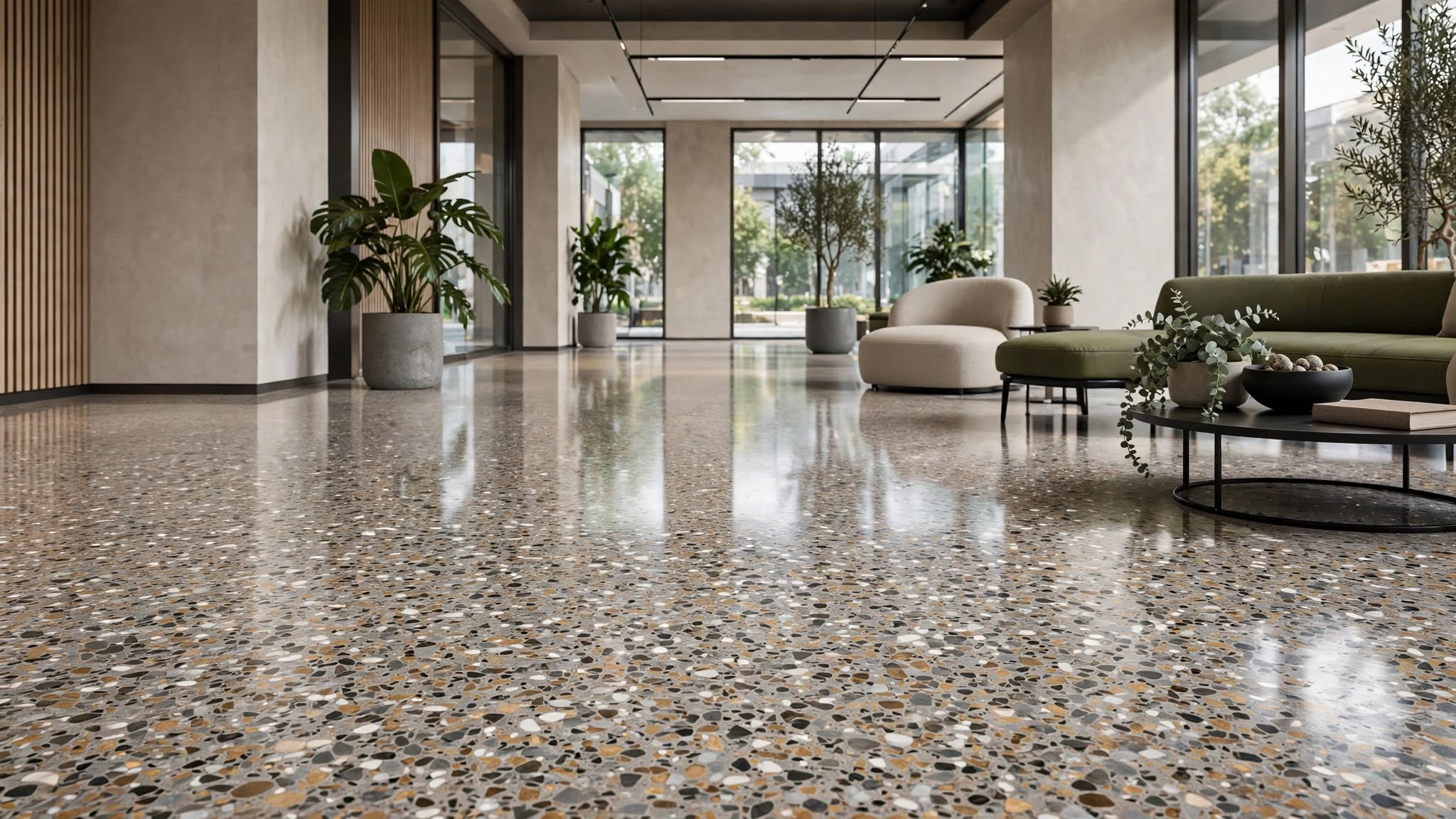
Terrazzo is generally made by combining chips of materials such as marble, granite, quartz, or glass with a cement-based or resin-based binder. Once the material has been installed and cured, the surface is ground and polished to expose the aggregate and create a smooth finish.
Because the decorative material is integrated into the flooring system, terrazzo has a depth and texture that differ from flooring products that simply imitate stone patterns.
The choice of aggregate, chip size, binder, and finish can significantly change its appearance. Fine aggregates can produce a subtle, uniform look, while larger chips create a more noticeable pattern. Designers can also use divider strips to separate colors, define shapes, or create geometric layouts.
A floor may look attractive when first installed, but its long-term value depends heavily on how it responds to daily use. Terrazzo flooring is designed as a hard, continuous surface that can tolerate repeated pedestrian traffic when the substrate, installation, and finishing work are handled correctly.
In commercial buildings, floors may experience constant movement from employees, visitors, carts, furniture, and equipment. A properly installed terrazzo surface provides a solid wear layer that is well suited to these conditions.
Its smooth surface also avoids some of the joints found in smaller individual flooring units. Fewer interruptions across the floor can contribute to a cleaner appearance and simplify routine care.
Durability, however, should not be confused with being maintenance-free. Cleaning methods, surface protection, moisture conditions, and the quality of the original installation all affect how a terrazzo floor performs over time.
For facilities focused on preserving flooring condition, the principles discussed in How to Extend the Life of Industrial Floors with Proper Maintenance are also relevant. Regular cleaning, appropriate maintenance products, and early attention to surface damage can help prevent minor issues from becoming larger problems.
One of the strongest design advantages of terrazzo flooring is that it does not belong to only one interior style. Its appearance depends largely on the materials and colors selected for the project.
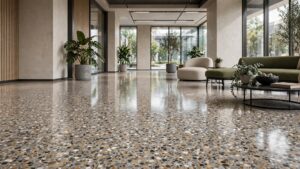
A light binder with small neutral chips can create a quiet surface for offices, reception areas, or minimalist interiors. Larger pieces of contrasting stone or glass can produce a more expressive finish for restaurants, shops, hotels, or public spaces.
The aggregate itself becomes part of the design. Marble chips can provide natural variation, while recycled glass may introduce brighter colors and reflective details. Different combinations allow designers to coordinate the floor with walls, furniture, counters, and other architectural finishes.
Terrazzo does not have to be installed as one uninterrupted color. Divider strips can form borders, curves, geometric shapes, or separate color fields.
This makes it possible to use flooring as part of the way a space is organized. For example, a large lobby could use changes in terrazzo color to distinguish circulation paths from seating areas without adding another flooring material.
Terrazzo can be considered for many environments where appearance and repeated use are both important. Common applications include educational buildings, offices, hospitality spaces, retail interiors, public facilities, hallways, entrances, and selected residential areas.
The right system still depends on the conditions of the project. A designer or installer should consider the existing substrate, expected traffic, moisture exposure, cleaning requirements, desired finish, and surrounding materials before choosing a terrazzo specification.
These details are particularly important during renovation projects, where the existing floor may need repairs or preparation before a new terrazzo system can be installed.
The finished surface is only one part of a terrazzo floor. Conditions underneath it can directly affect the final result.
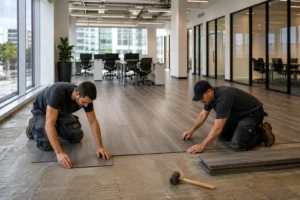
The substrate needs to be evaluated for issues such as cracks, uneven areas, contamination, or moisture concerns. Depending on the terrazzo system and project conditions, additional preparation may be necessary before installation begins.
Mixing and placement also require care. Aggregate distribution, divider placement, grinding, polishing, and finishing all influence the appearance of the completed floor. Poor preparation or workmanship can reduce the benefits of using a durable flooring material in the first place.
Terrazzo is relatively straightforward to maintain, but the cleaning approach should match the specific system and finish. Routine removal of dust and abrasive debris helps reduce unnecessary surface wear. Spills should also be addressed before they leave residue or create staining concerns.
Harsh or unsuitable cleaning products can affect certain terrazzo surfaces, so maintenance teams should follow the recommendations provided for the installed system. Entrance mats can also help limit the amount of grit carried onto floors in busy buildings.
Over time, a terrazzo surface may require professional maintenance or refinishing depending on its condition and level of use. Addressing wear appropriately can help retain both the floor’s appearance and functionality.
Choosing terrazzo flooring involves more than selecting an attractive sample. The design should work with the practical demands of the building.
Color, aggregate size, finish, traffic conditions, cleaning routines, substrate quality, and installation requirements should be considered together. A visually complex design may suit a feature area, while a simpler terrazzo finish may be more appropriate for a large working environment.
This ability to adjust the visual character without abandoning practical flooring requirements is what gives terrazzo its versatility.
Terrazzo flooring combines a hard-wearing surface with considerable freedom in color, aggregate, pattern, and finish. It can support the clean lines of a contemporary interior while providing the durability required in spaces that experience regular use.
Its performance depends on thoughtful material selection, proper substrate preparation, skilled installation, and suitable maintenance. When those elements are considered from the beginning, terrazzo can serve as both a functional flooring system and an intentional part of the overall interior design.